1815–1871
The Unification of Italy & Germany
Italy and Germany were once collections of small states. In the 1800s patriots like Garibaldi, Cavour and Bismarck joined them into single nations: Italy by 1861 (with Rome in 1870), and Germany in 1871, when its emperor was crowned in the Hall of Mirrors at Versailles.
Why artists painted it
Painters of both countries made heroic pictures to build national pride. Garibaldi's red-shirted volunteers and the German imperial proclamation became symbols of a new national identity.
 The Proclamation of the German Empire · Anton von Werner, 1885
 The Proclamation of the German Empire
Anton von Werner · 1885
👁️ Painted at the time
On January 18, 1871, in the Hall of Mirrors at Versailles, the German princes proclaim King Wilhelm I of Prussia Emperor of Germany, with Bismarck in white at the center.
 The Kiss
Francesco Hayez · 1859
👁️ Painted at the time
Hayez's lovers kiss in medieval costume. Italians of 1859 read it as a hidden message about uniting against Austria.
 The Battle of Königgrätz
Georg Bleibtreu · 1869
👁️ Painted at the time
Prussian infantry advance across the fields at Königgrätz in 1866, the battle where Prussia defeated Austria and took the lead in uniting Germany.
 Bismarck and Napoleon III after Sedan
Wilhelm Camphausen · 1878
👁️ Painted at the time
The captured French emperor Napoleon III sits with the Prussian chancellor Otto von Bismarck after the Battle of Sedan in September 1870, the defeat that ended the French Empire.
 Camillo Benso, Count of Cavour
Michele Gordigiani · 1855
👁️ Painted at the time
Count Camillo Benso di Cavour, the prime minister of Piedmont, was the clever politician who helped unite Italy in the 1860s.
 The Injured Garibaldi in the Aspromonte Mountains
Gerolamo Induno · 1862
👁️ Painted at the time
The Italian hero Giuseppe Garibaldi is wounded in 1862 at Aspromonte while trying to march on Rome, and his red-shirted followers gather around him.
 The Battle of Magenta
Adolphe Yvon · 1861
👁️ Painted at the time
French and Italian troops defeat the Austrian army at Magenta in 1859, one of the first big victories in the war that began Italy's unification.
 The Battle of Solferino
Carlo Bossoli · 1859
👁️ Painted at the time
The Battle of Solferino in 1859 was so bloody that a Swiss businessman who witnessed it, Henry Dunant, started the Red Cross.
 The Opening of the First Parliament of the Kingdom of Italy
Carlo Bossoli · 1861
👁️ Painted at the time
Italy's first national parliament is opened in 1861 under a canopy of flags and cheering crowds, when the Kingdom of Italy was officially born.
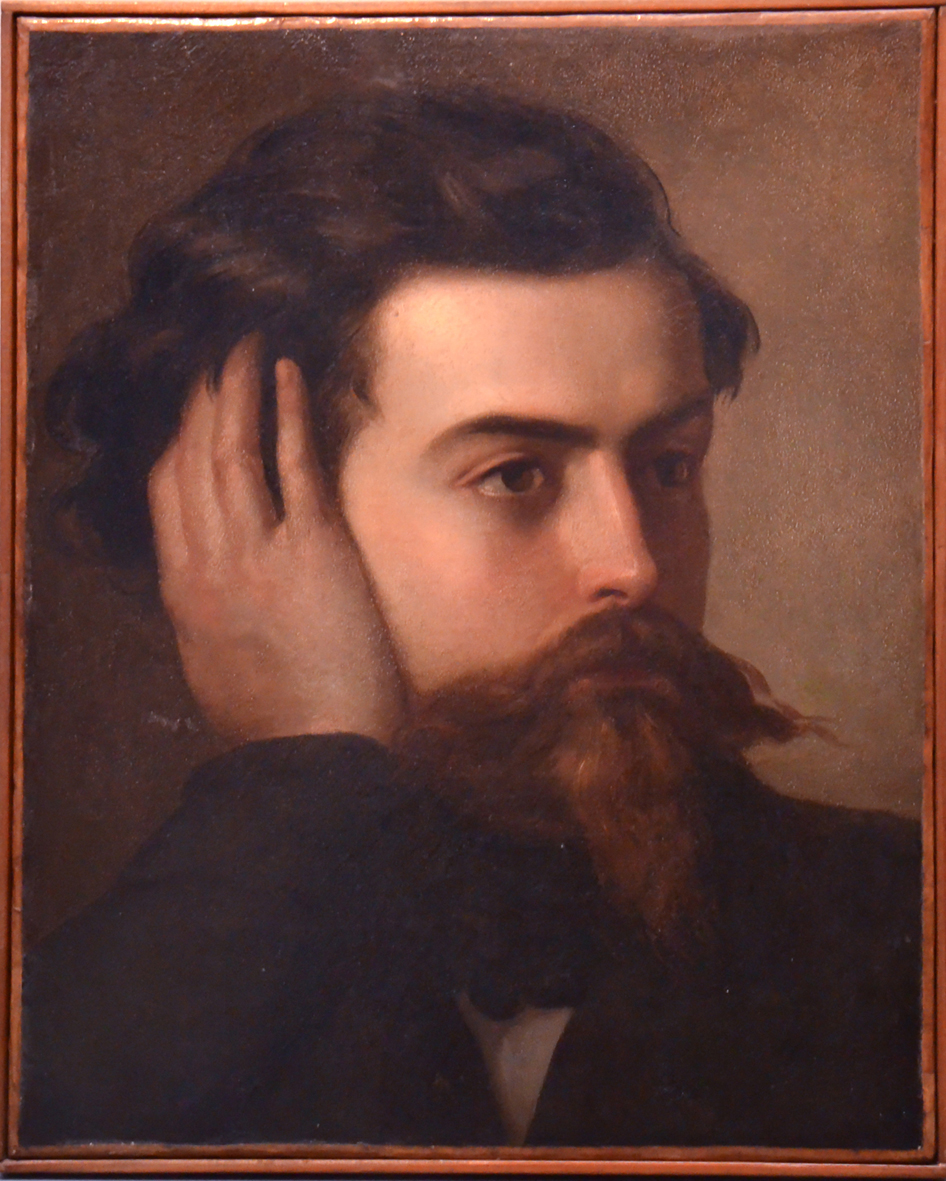 Goffredo Mameli
Domenico Induno · 1849
👁️ Painted at the time
Goffredo Mameli, the young poet who wrote the words of Italy's national anthem, died at the age of 21 defending the Roman Republic in 1849.
 Otto von Bismarck
Franz von Lenbach · 1890
👁️ Painted at the time
Otto von Bismarck, the Prussian chancellor who united Germany under Prussia in 1871, in a portrait of 1890 by Franz von Lenbach.
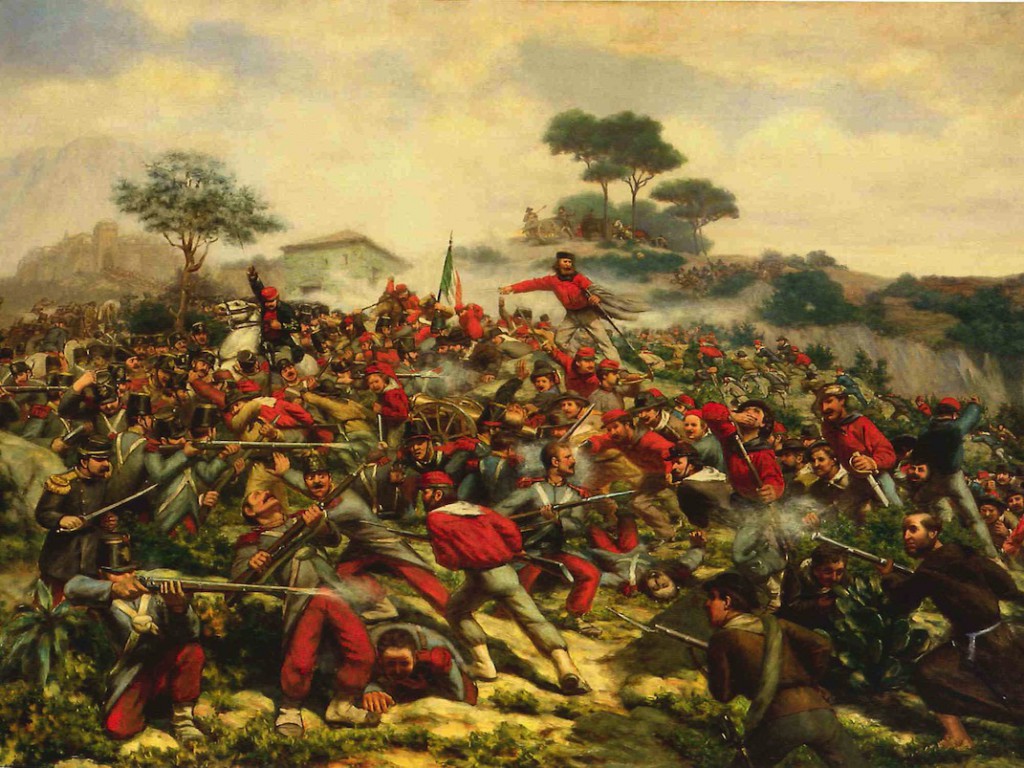 The Battle of Calatafimi
Remigio Legat · 1860
👁️ Painted at the time
Garibaldi's volunteers, the Thousand, storm a hill at Calatafimi in Sicily in May 1860 and beat a larger Neapolitan army, a key victory on the way to uniting Italy.