768–814
Charlemagne & the Early Middle Ages
Charlemagne, king of the Franks, ruled much of Western Europe from 768 to 814. On Christmas Day in 800, the Pope crowned him emperor in Rome, the first in the West since Rome's fall. He supported scholars and schools, and his court helped save many ancient books.
Why artists painted it
Painters showed Charlemagne as the founder of Christian Europe: a wise king surrounded by scholars and knights. In the 1800s he became a national hero for both the French and the Germans.
 The Battle of Poitiers, 732 · Charles de Steuben, 1837
 The Battle of Poitiers, 732
Charles de Steuben · 1837
🕰️ Painted about 1,020 years later
In 732 the Frankish leader Charles Martel stopped a Muslim army from advancing farther into France at the Battle of Tours and Poitiers, and his grandson was Charlemagne.
 The Battle of Tolbiac, 496
Ary Scheffer · 1836
🕰️ Painted about 1,020 years later
Clovis, king of the Franks, vows to become a Christian if he wins at Tolbiac against the Alemanni, and then he does.
 The Death of Roland
Jean Fouquet · 1455
🕰️ Painted about 640 years later
The hero Roland, one of Charlemagne's knights, dies after fighting at Roncesvalles in 778, in the legend that became the Song of Roland.
 Muslim Troops Leaving Narbonne to Pepin the Short, 759
Émile Bayard · 1880
🕰️ Painted about 1,070 years later
Pepin the Short, Charlemagne's father, finally takes the city of Narbonne in 759, driving out the Muslim garrison.
 The Baptism of Clovis
Master of Saint Giles · 1500
🕰️ Painted about 690 years later
Clovis, the king of the Franks, is baptized by a bishop around the year 496, which made France a Christian kingdom.
 The Coronation of Charlemagne
Raphael · 1516
🕰️ Painted about 700 years later
On Christmas Day in 800, Pope Leo III crowns Charlemagne emperor in Rome, the first emperor in the West in over 300 years.
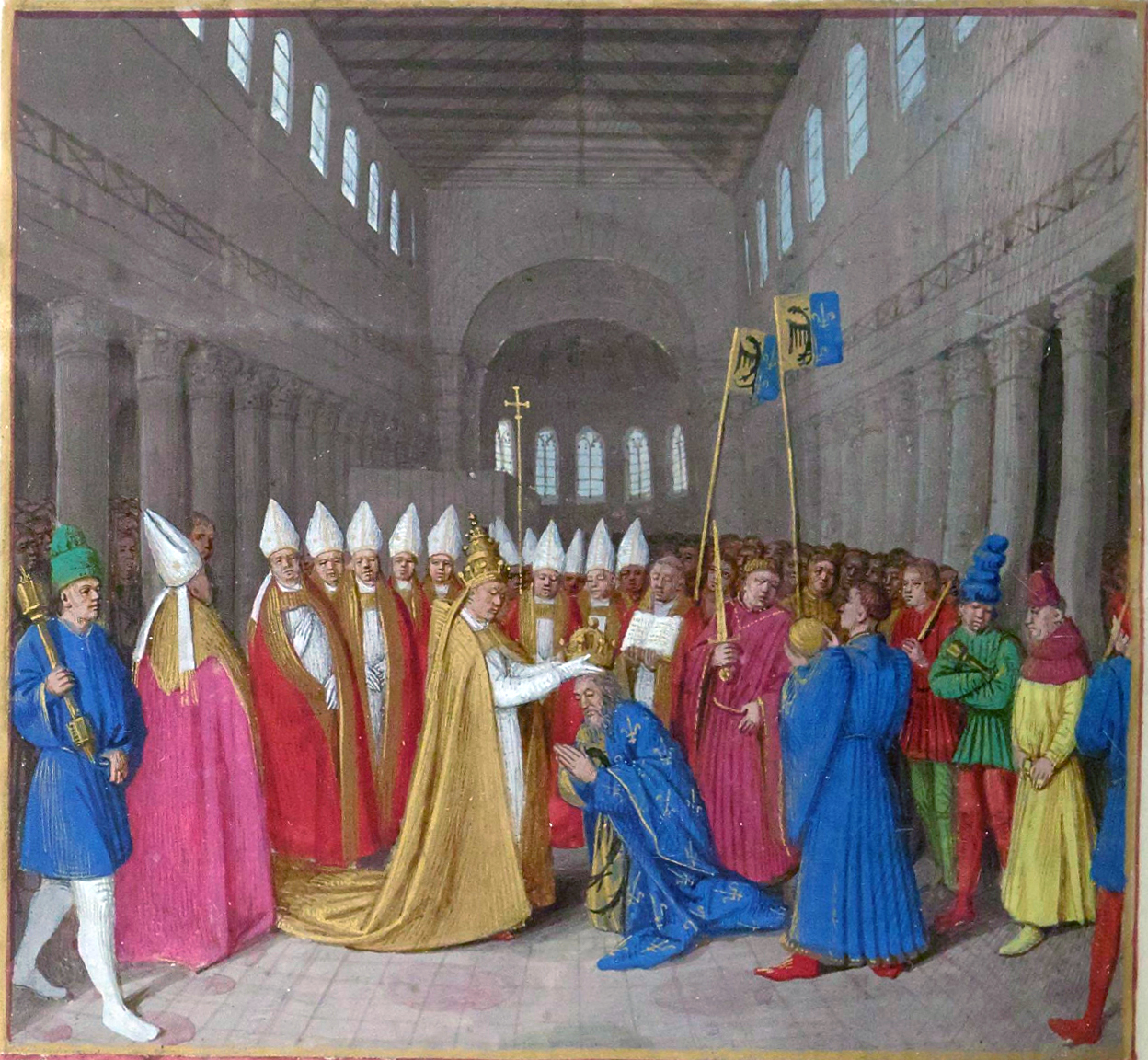 The Coronation of Charlemagne (Grandes Chroniques de France)
Jean Fouquet · 1458
🕰️ Painted about 640 years later
This glowing little picture of Charlemagne's crowning comes from the Grandes Chroniques de France, the French royal history.
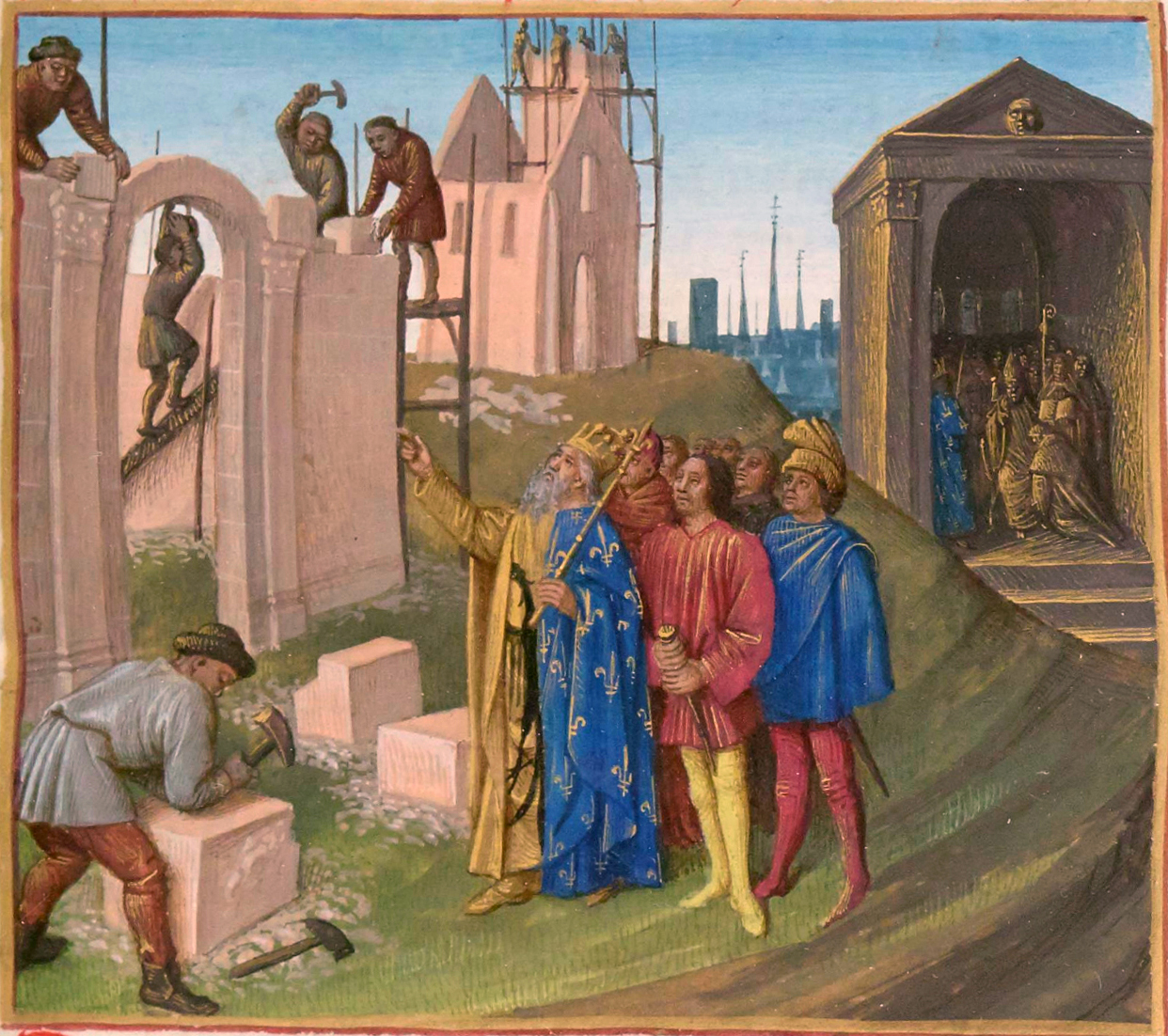 The Building of the Chapel at Aachen (Grandes Chroniques de France)
Jean Fouquet · 1458
🕰️ Painted about 640 years later
Workers build the great chapel at Aachen, Charlemagne's capital, using ladders and stone blocks.
 Saint Charlemagne (Karel Veliký)
Theodoric of Prague · 1360
🕰️ Painted about 550 years later
Master Theodoric, the court painter to Emperor Charles IV in Prague, painted Charlemagne as a saint in the 1360s.
 Charlemagne and Louis the Pious
Anonymous illuminator (French chronicle) · 1400
🕰️ Painted about 590 years later
The emperor Charlemagne and his son Louis the Pious stand side by side in a manuscript illumination from a French royal chronicle of the 1300s or 1400s.