312–476
The Fall of the Western Roman Empire
In the 300s and 400s AD, the Western Roman Empire was weakened by civil wars, money troubles and pressure from peoples like the Goths, Vandals and Huns. Rome itself was sacked in 410 and 455, and in 476 the last emperor in the West was removed. The Eastern Empire, called Byzantium, carried on for another thousand years.
Why artists painted it
Artists have used Rome's fall as a warning ever since. In The Course of Empire, Thomas Cole showed a great city rising and falling, and told Americans that no nation is safe forever.
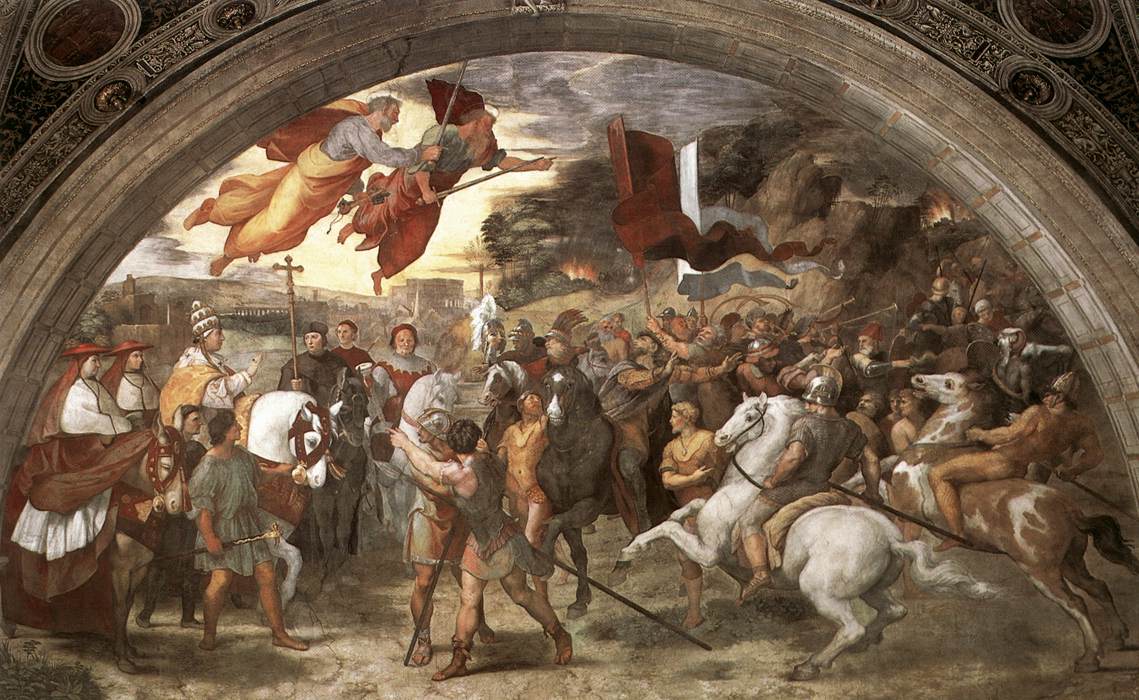 The Meeting of Leo the Great and Attila · Raphael, 1514
 Genseric Sacking Rome
Karl Bryullov · 1836
🕰️ Painted about 1,360 years later
In 455 AD the Vandal king Genseric captured Rome and looted it for two weeks, one of the blows that weakened the Western Empire.
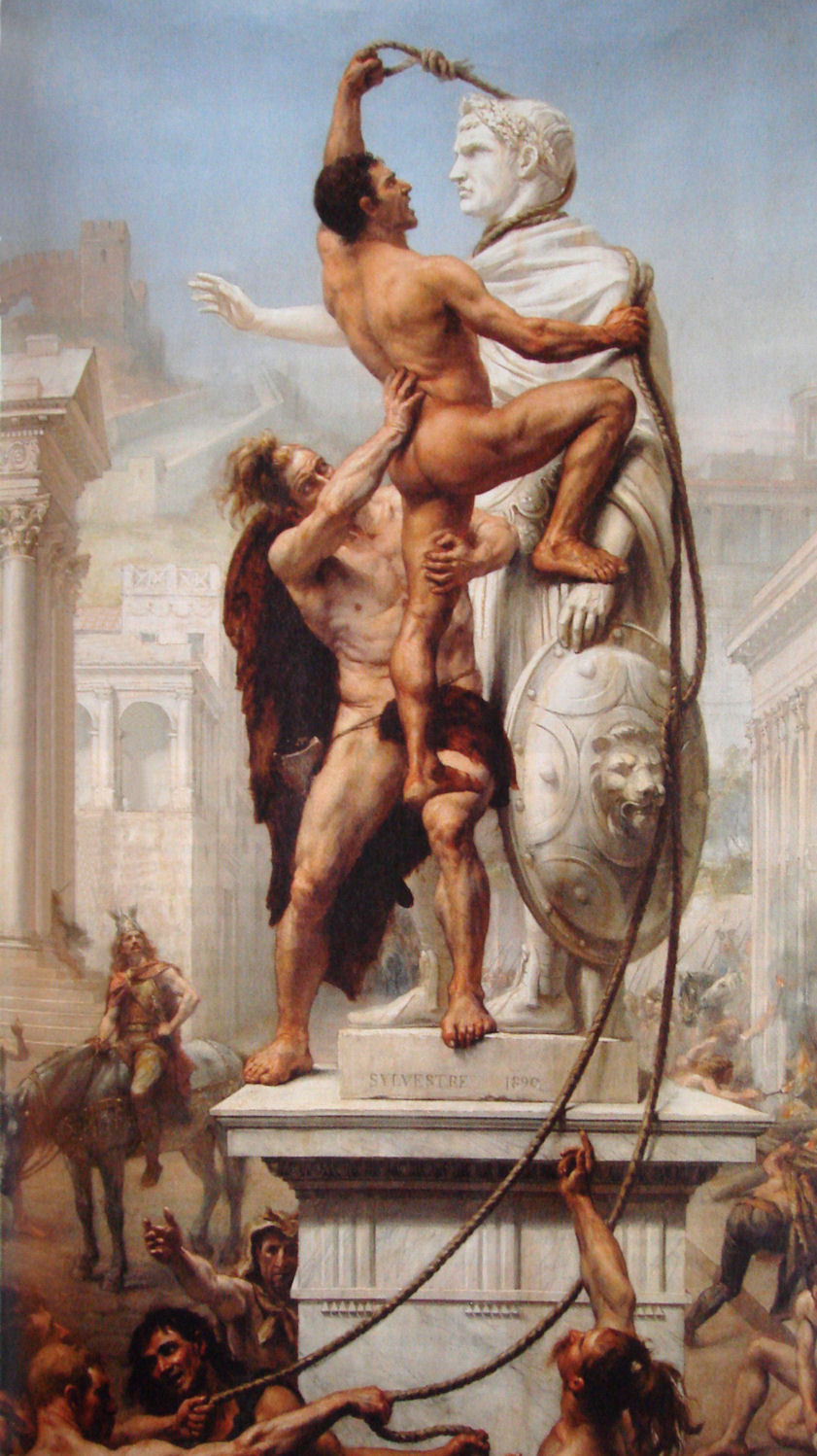 The Sack of Rome by the Visigoths on 24 August 410
Joseph-Noël Sylvestre · 1890
🕰️ Painted about 1,410 years later
In 410 the Visigoths under Alaric broke into Rome, the first time in about 800 years that an enemy had taken the city.
 Attila and His Hordes Overrun Italy and the Arts
Eugène Delacroix · 1843
🕰️ Painted about 1,370 years later
Attila the Hun, whose army terrified Rome in the 450s, rides over Italy, trampling art and learning under his horses' hooves.
The Meeting of Leo the Great and Attila
Raphael · 1514
🕰️ Painted about 1,040 years later
In 452 Pope Leo I met Attila the Hun and, according to the story, persuaded him to turn his army back from Rome.
 The Invasion of the Barbarians
Ulpiano Checa · 1887
🕰️ Painted about 1,410 years later
Ulpiano Checa, who loved painting wild horses and chariots, shows hordes of mounted warriors charging across a snowy plain.
 The Feast of Attila
Mór Than · 1870
🕰️ Painted about 1,390 years later
Attila the Hun feasts with his warriors and advisors in a great hall.
 The Triumphant Entry of Constantine into Rome
Peter Paul Rubens · 1621
🕰️ Painted about 1,140 years later
The emperor Constantine rides into Rome in 312 AD after beating his rival at the Milvian Bridge, an event that opened the way for Christianity to become the empire's main religion.
 The Battle of the Milvian Bridge
Giulio Romano · 1520
🕰️ Painted about 1,040 years later
Constantine's army defeats his rival Maxentius at the Milvian Bridge in 312 AD, a victory he said was helped by a vision of a cross.
 The Favorites of the Emperor Honorius
John William Waterhouse · 1883
🕰️ Painted about 1,410 years later
The weak emperor Honorius was told that Rome had fallen and said it couldn't be, he had just fed her.
 Alaric in Athens
Ludwig Thiersch · 1879
🕰️ Painted about 1,400 years later
The Visigoth king Alaric enters Athens in 396 AD, and the city's people stand before him in fear.
 Constantius Appoints Constantine as His Successor
Peter Paul Rubens · 1622
🕰️ Painted about 1,150 years later
Constantius, a Roman emperor, names his son Constantine as his successor in 306 AD, and Constantine goes on to become the first Christian emperor.
 Theodosius and Saint Ambrose
Peter Paul Rubens · 1617
🕰️ Painted about 1,140 years later
In 390 Bishop Ambrose of Milan stands in the church doorway and refuses to let the Emperor Theodosius enter until he repents for a terrible massacre.