1607–1700
The Pilgrims & Colonial America
In 1620 the Mayflower brought about 100 English Pilgrims to Plymouth in what is now Massachusetts. With help from the Wampanoag people, they survived their first winters and shared the harvest celebration we call the first Thanksgiving. Soon more colonies grew along the Atlantic coast.
Why artists painted it
Painters of the 1800s turned the Pilgrims into America's origin story, often showing them as calm, devout and brave. Their pictures became part of how Americans remember Thanksgiving.
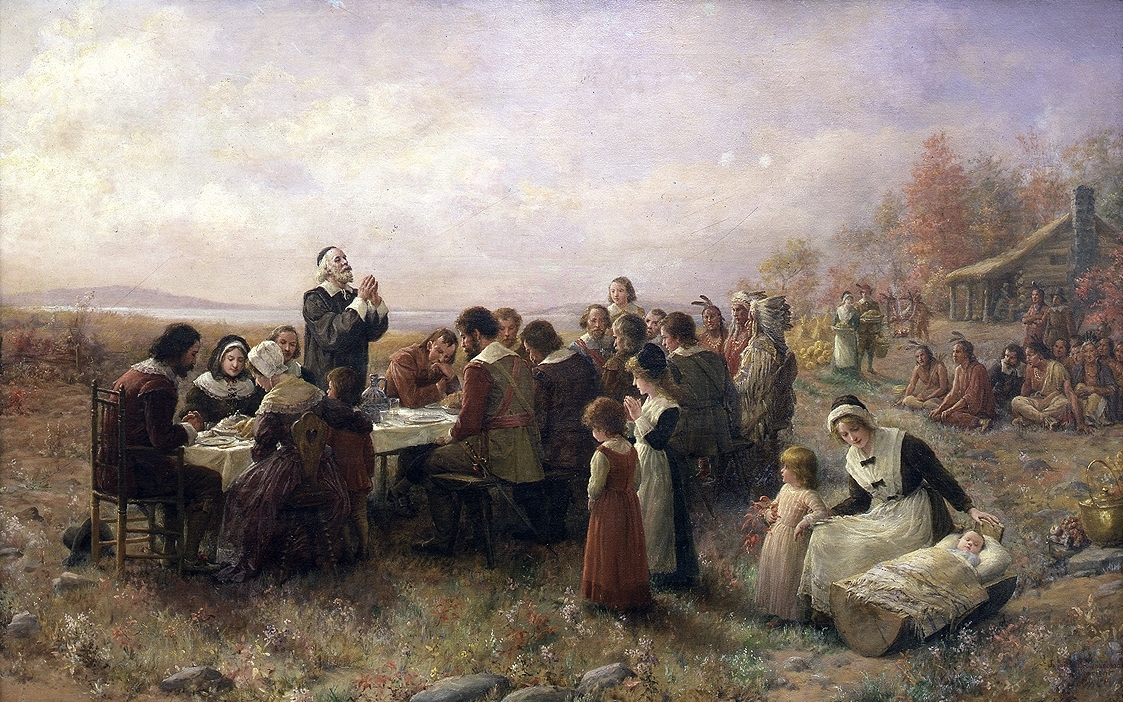 The First Thanksgiving at Plymouth · Jennie Augusta Brownscombe, 1914
The First Thanksgiving at Plymouth
Jennie Augusta Brownscombe · 1914
🕰️ Painted about 210 years later
The Pilgrims and the Wampanoag people share a harvest meal in the autumn of 1621, the event we remember as the first Thanksgiving.
 Embarkation of the Pilgrims
Robert Walter Weir · 1843
🕰️ Painted about 140 years later
The Pilgrims pray on the deck of the Speedwell in the Dutch port of Delfshaven in 1620 before sailing to America.
 The Landing of the Pilgrims
Henry Bacon · 1877
🕰️ Painted about 180 years later
The Pilgrims row ashore at Plymouth in December 1620, in a famous painting by Henry Bacon of 1877.
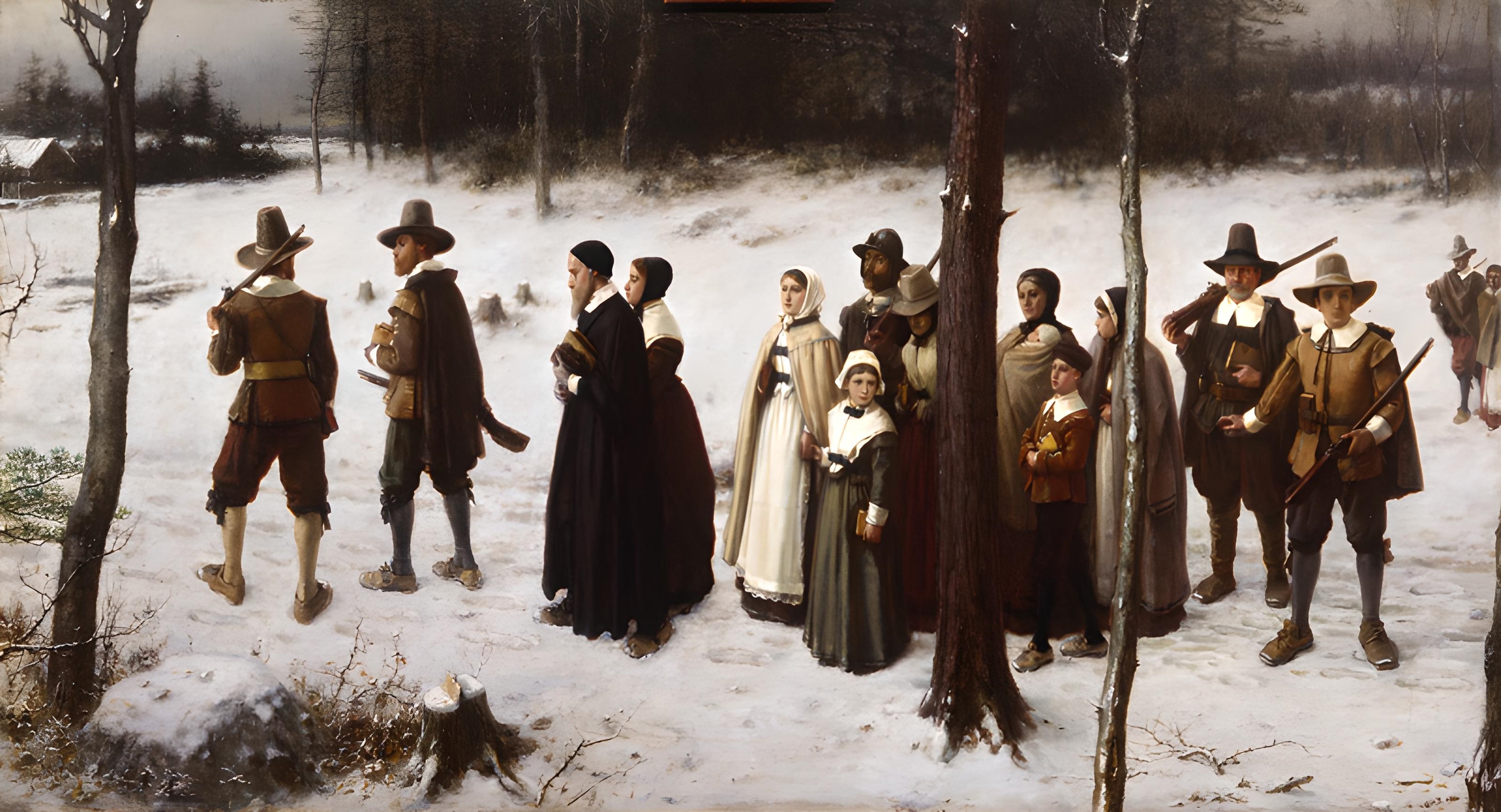 Pilgrims Going to Church
George Henry Boughton · 1867
🕰️ Painted about 170 years later
Pilgrims walk through the snow to church, with muskets over their shoulders in case of danger.
 Mayflower in Plymouth Harbor
William Halsall · 1882
🕰️ Painted about 180 years later
The Mayflower, the ship that carried about 100 Pilgrims to America in 1620, rests in the harbor at sunset while a boat heads to shore.
 The Mayflower Compact, 1620
Jean Leon Gerome Ferris · 1899
🕰️ Painted about 200 years later
The men of the Mayflower sign an agreement to make fair laws and govern themselves in the new colony.
 Thanksgiving at Plymouth
Jennie Augusta Brownscombe · 1925
🕰️ Painted about 220 years later
Pilgrims and Wampanoag people gather for the harvest feast of 1621, which later became Thanksgiving.
 The Marriage of Pocahontas
Henry Brueckner · 1855
🕰️ Painted about 160 years later
Pocahontas, the daughter of the Powhatan chief, marries the English settler John Rolfe in 1614, a wedding that brought a few years of peace to Virginia.
 Pocahontas
Pierre Gustave Staal · 1858
🕰️ Painted about 160 years later
A portrait of Pocahontas, the young Powhatan woman who became known to the English settlers at Jamestown and later traveled to England, where she died in 1617.
 The Landing of Roger Williams in 1636
Alonzo Chappel · 1857
🕰️ Painted about 160 years later
After being banished from the Massachusetts colony for his beliefs, Roger Williams is welcomed by Narragansett people in 1636 and founds Providence, Rhode Island, as a place of religious freedom.
 Party for New Year's Day in New Amsterdam, 1636
George Henry Boughton · 1870
🕰️ Painted about 170 years later
Dutch settlers in the colony of New Amsterdam on Manhattan, the future New York, celebrate New Year's Day in the snow.
 Courtship in New Amsterdam
Francis William Edmonds · 1850
🕰️ Painted about 150 years later
A young Dutch couple meets in the days when New York was still the Dutch town of New Amsterdam.
 View of New Amsterdam
Johannes Vingboons · 1664
👁️ Painted at the time
This watercolor shows the small Dutch town of New Amsterdam on the tip of Manhattan, with windmills, ships and a fort.
 Pocahontas at the Court of King James
Richard Rummell · 1907
🕰️ Painted about 210 years later
Pocahontas, dressed as an English lady, is presented to King James I in London in 1616.