1066–1087
The Norman Conquest
In 1066 the Norman duke William crossed the English Channel and defeated King Harold Godwinson at the Battle of Hastings. William became king of England and the Normans built castles, changed the law and brought French words to the English language. The famous Bayeux Tapestry tells the story in stitches.
Why artists painted it
The year 1066 is the most famous date in English history. Victorian painters made scenes of Harold's death and William's landing to show where England's story began.
 The Death of Harold (Bayeux Tapestry) · Bayeux Tapestry embroiderers, 1077
 The Death of Harold (Bayeux Tapestry)
Bayeux Tapestry embroiderers · 1077
👁️ Painted at the time
Harold, the last Anglo-Saxon king of England, dies at the Battle of Hastings in 1066.
 Norman Knights and Archers at Hastings (Bayeux Tapestry)
Bayeux Tapestry embroiderers · 1077
👁️ Painted at the time
Norman knights on horses and archers charge in this section of the Bayeux Tapestry, the embroidered story of the conquest of England in 1066.
 Harold Is Crowned King (Bayeux Tapestry)
Bayeux Tapestry embroiderers · 1077
👁️ Painted at the time
Harold takes the throne of England in January 1066 after King Edward dies, in a scene from the Bayeux Tapestry.
 Harold Swears an Oath to William (Bayeux Tapestry)
Bayeux Tapestry embroiderers · 1077
👁️ Painted at the time
Harold swears an oath of loyalty to William of Normandy with his hands on holy relics, in a scene from the Bayeux Tapestry.
 King Edward the Confessor (Bayeux Tapestry)
Bayeux Tapestry embroiderers · 1077
👁️ Painted at the time
The Bayeux Tapestry begins with the old, childless King Edward the Confessor of England on his throne, whose death would lead to the fight for the crown in 1066.
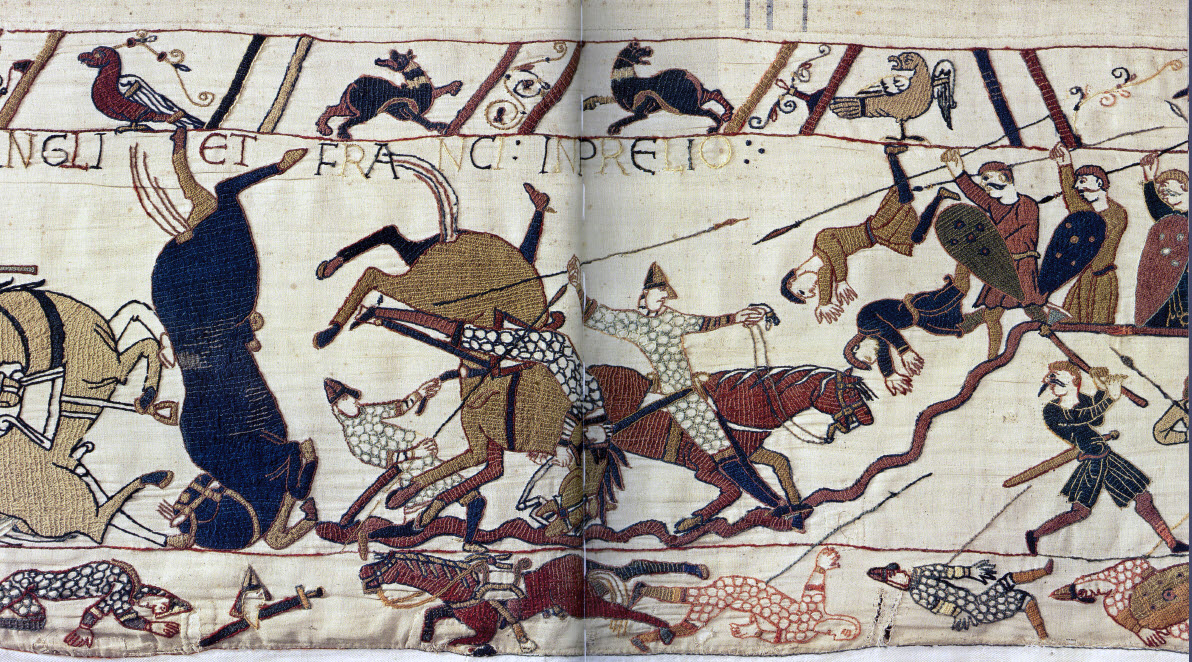 Horses in the Battle of Hastings (Bayeux Tapestry)
Bayeux Tapestry embroiderers · 1077
👁️ Painted at the time
Horses tumble and soldiers fight at the Battle of Hastings in the Bayeux Tapestry.
 William Gives Harold Arms (Bayeux Tapestry)
Bayeux Tapestry embroiderers · 1077
👁️ Painted at the time
William of Normandy gives Harold weapons in this scene from the Bayeux Tapestry.
 Bishop Odo, William and Robert (Bayeux Tapestry)
Bayeux Tapestry embroiderers · 1077
👁️ Painted at the time
Duke William of Normandy sits with his half-brothers, Bishop Odo and Robert, planning the invasion of England.
 Plate from The Bayeux Tapestry (Stothard)
Charles Alfred Stothard · 1823
🕰️ Painted about 740 years later
In the early 1800s the English antiquarian Charles Alfred Stothard made careful copies of the Bayeux Tapestry for the Society of Antiquaries.
 Godiva
John Collier · 1897
🕰️ Painted about 810 years later
Lady Godiva, who lived in the years before the Norman Conquest, rides through Coventry to win a tax cut for the townspeople.
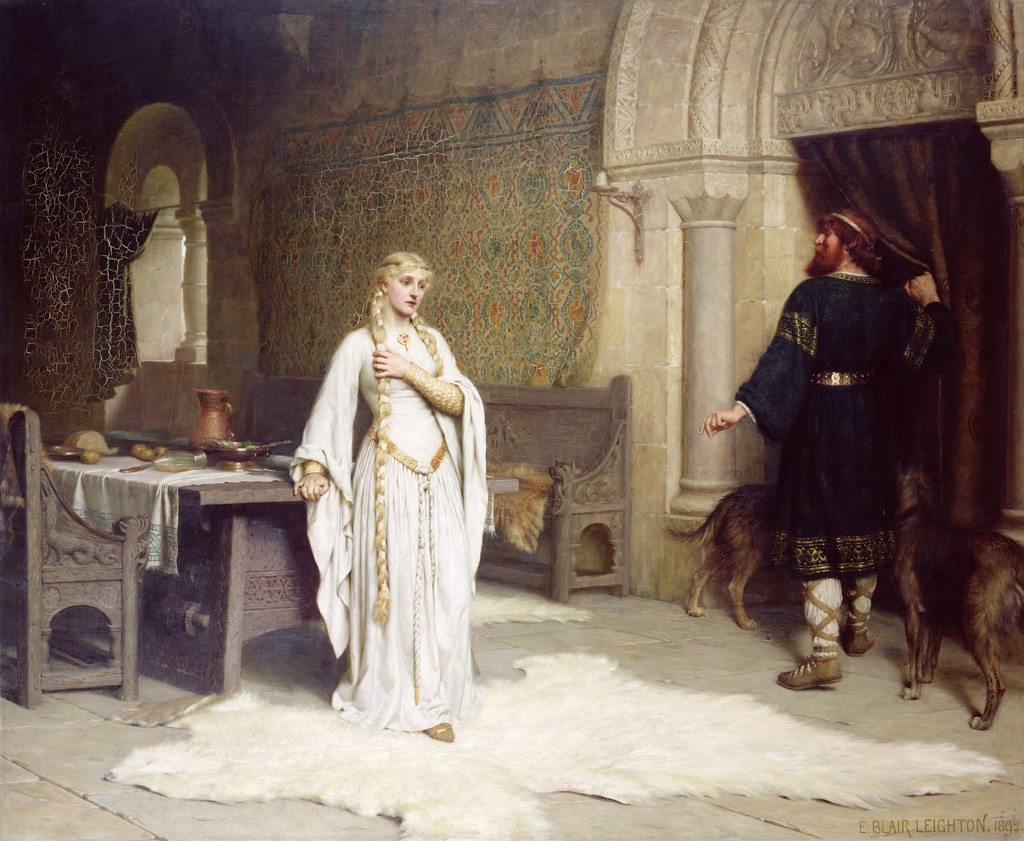 Lady Godiva
Edmund Blair Leighton · 1892
🕰️ Painted about 800 years later
Edmund Blair Leighton shows Lady Godiva before her famous ride through Coventry, which in the legend she made to persuade her husband to lower the town's taxes.
 Godiva Preparing to Ride through Coventry
George Jones · 1833
🕰️ Painted about 750 years later
The legend says Lady Godiva of Coventry agreed to ride through the town to persuade her husband to cut the taxes, while the people promised to stay inside.