Style & movement
Abstract Art
Abstract art is painting without a picture of something. Instead of a person, tree or boat, you get colors, lines and shapes that make you feel something, like music you can see. A few artists in the early 1900s, in Munich, Moscow, Paris and Stockholm, realized that paint didn't have to copy the world. This collection takes you from the painters who were nearly there, through the pioneers, to playful corners like Klee's cats and fish and Schwitters's collages made from trash. Try asking: what does this sound like? What would it feel like to step inside?
161 paintings
How it began: roads to abstraction
Long before anyone painted a pure shape, some artists were already letting color, light and feeling take over from the subject. These are the stepping stones.
 Rain, Steam and Speed – The Great Western RailwayJ. M. W. Turner · 1844
 Nocturne in Black and Gold – The Falling RocketJames McNeill Whistler · 1875
 Impression, SunriseClaude Monet · 1872
 The Starry NightVincent van Gogh · 1889
 Mont Sainte-Victoire seen from BellevuePaul Cézanne · 1892
 A Sunday Afternoon on the Island of La Grande JatteGeorges Seurat · 1884
 Starry NightEdvard Munch · 1893
 The Great Wave off KanagawaKatsushika Hokusai · 1830
Color and feeling: Kandinsky and the Blue Rider
Wassily Kandinsky believed colors work like music: yellow is a trumpet, blue is a cello. He and his friends in Munich, the Blue Rider group, painted feelings, sounds and dreams instead of things.
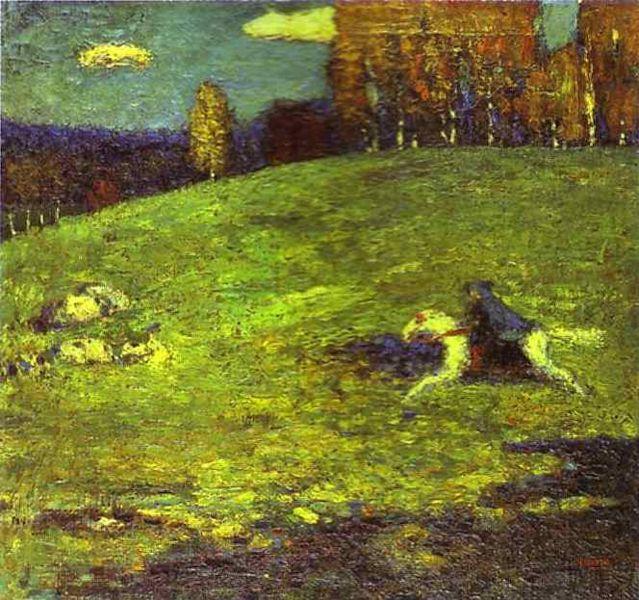 The Blue RiderWassily Kandinsky · 1903
 Colorful LifeWassily Kandinsky · 1907
 Improvisation 26Wassily Kandinsky · 1912
 Improvisation 19Wassily Kandinsky · 1911
 Impression lll (Concert)Wassily Kandinsky · 1911
 Composition IVWassily Kandinsky · 1911
 Composition VWassily Kandinsky · 1911
 Composition VIWassily Kandinsky · 1913
 Composition VIIWassily Kandinsky · 1913
 Composition VIIIWassily Kandinsky · 1923
 On White IIWassily Kandinsky · 1923
 Yellow-Red-BlueWassily Kandinsky · 1925
 Several CirclesWassily Kandinsky · 1926
 In GreyWassily Kandinsky · 1919
 UpwardWassily Kandinsky · 1929
 Red Spot IIWassily Kandinsky · 1921
 Black GridWassily Kandinsky · 1922
 Accent on PinkWassily Kandinsky · 1926
 Picture with a Black ArchWassily Kandinsky · 1912
 GorgeWassily Kandinsky · 1914
 Church at MurnauWassily Kandinsky · 1910
 Blue Horse IFranz Marc · 1911
 Yellow CowFranz Marc · 1911
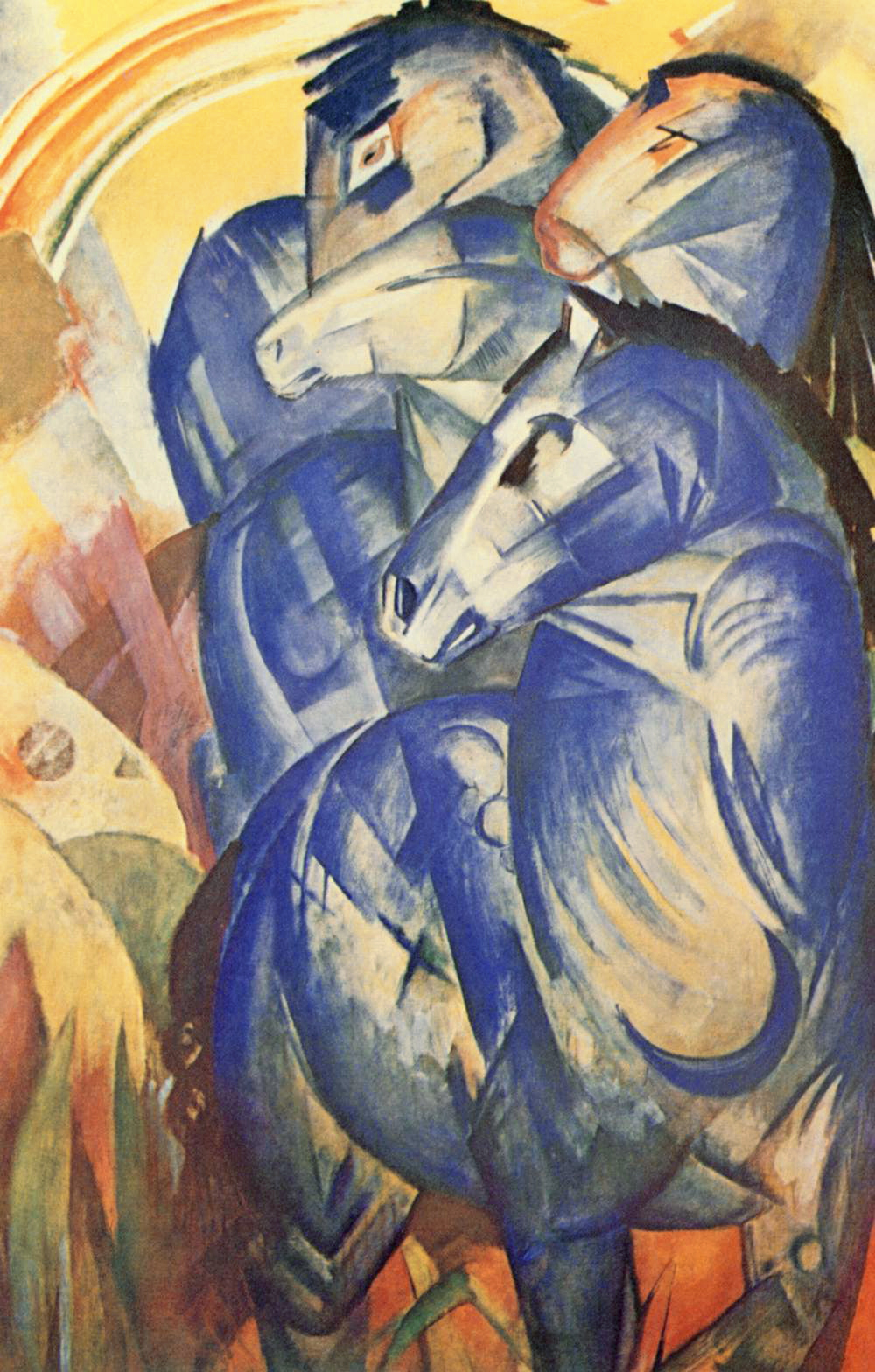 The Tower of Blue HorsesFranz Marc · 1913
 The Large Blue HorsesFranz Marc · 1911
 Blue horseFranz Marc · 1912
 FoxFranz Marc · 1911
 The FoxesFranz Marc · 1913
 Porträt mit Äpfeln: Frau des KünstlersAugust Macke · 1909
 Woman in Green JacketAugust Macke · 1913
 Mode: Woman with Parasol in front of Milliner's ShopAugust Macke · 1914
 Large Bright ShowcaseAugust Macke · 1912
 Girls under TreesAugust Macke · 1914
 Zoological Garden IAugust Macke · 1912
 Donkey RiderAugust Macke · 1914
 People by a Blue LakeAugust Macke · 1913
 Tunisian LandscapeAugust Macke · 1914
 Abstract HeadAlexej von Jawlensky · 1921
 MedusaAlexej von Jawlensky · 1923
 The Humpback IAlexej von Jawlensky · 1911
 Into the NightMarianne von Werefkin · 1910
 Selfportrait IMarianne von Werefkin · 1910
Squares, grids and straight lines
What happens if you throw away everything except shape and color? Malevich painted a black square, Mondrian a grid of red, yellow and blue, and Russian artists built whole imaginary worlds out of lines and planes.
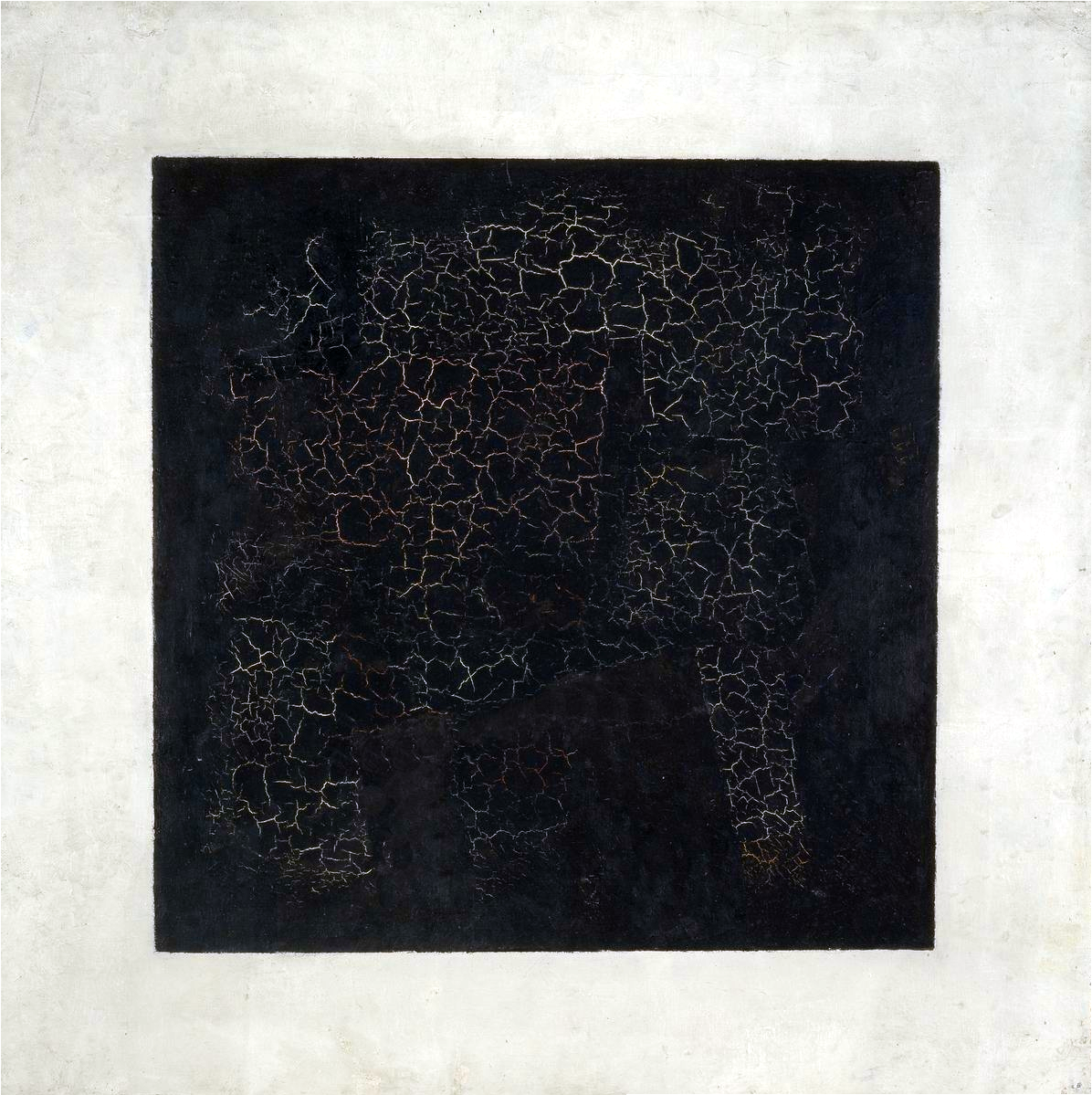 Black Square (1915)Kazimir Malevich · 1915
 Suprematist CompositionKazimir Malevich · 1916
 Red SquareKazimir Malevich · 1915
 Black CrossKazimir Malevich · 1915
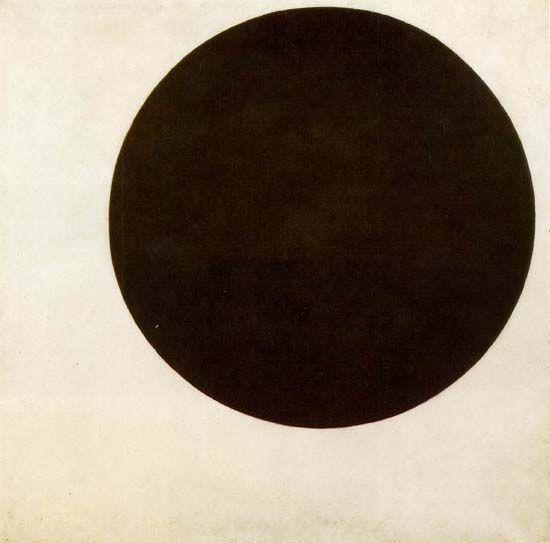 Black CircleKazimir Malevich · 1924
 Suprematist Composition: White on WhiteKazimir Malevich · 1918
 Dynamic SuprematismKazimir Malevich · 1916
 The Knife GrinderKazimir Malevich · 1912
 An Englishman in MoscowKazimir Malevich · 1914
 The Red TreePiet Mondrian · 1909
 Gray TreePiet Mondrian · 1911
 Still Life with Gingerpot 2Piet Mondrian · 1912
 Composition 10 in Black and WhitePiet Mondrian · 1915
 Composition with Large Red Plane, Yellow, Black, Grey and BluePiet Mondrian · 1921
 Composition XIVPiet Mondrian · 1913
 Composition A: Composition with Black, Red, Gray, Yellow, and BluePiet Mondrian · 1920
 Composition with Grid 1Piet Mondrian · 1918
 Tableau IPiet Mondrian · 1921
 Composition IXTheo van Doesburg · 1917
 Counter-Composition of Dissonances XVITheo van Doesburg · 1925
 Card PlayersTheo van Doesburg · 1916
 Proun 19DEl Lissitzky · 1920
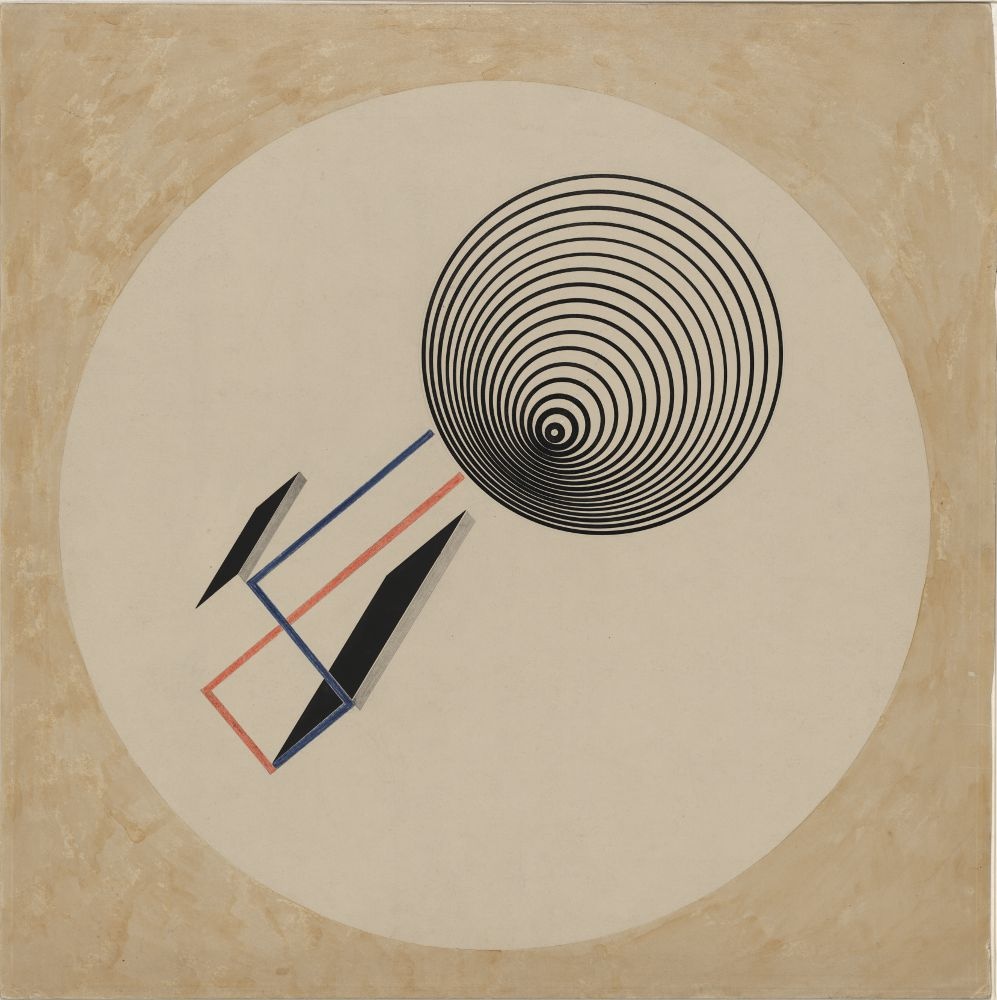 Proun 93 (Conical)El Lissitzky · 1923
 Painterly ArchitectonicLyubov Popova · 1917
 Architectonic PaintingLyubov Popova · 1917
 Portrait of a PhilosopherLyubov Popova · 1915
 Green LineOlga Rozanova · 1917
 SuprematismOlga Rozanova · 1916
 Non-Objective CompositionOlga Rozanova · 1917
 Red Circle on a Black SurfaceIlya Chashnik · 1925
 Spherical SuprematismIvan Kliun · 1923
 Three-Color Suprematist CompositionIvan Kliun · 1917
 Theatrical CompositionAleksandra Ekster · 1925
Circles, spirals and rainbows of light
Hilma af Klint painted glowing spirals and flowers years before anyone else dared, and Robert Delaunay made color itself the subject, circling and dancing across the canvas.
 Windows Open Simultaneously (First Part, Second Motif)Robert Delaunay · 1912
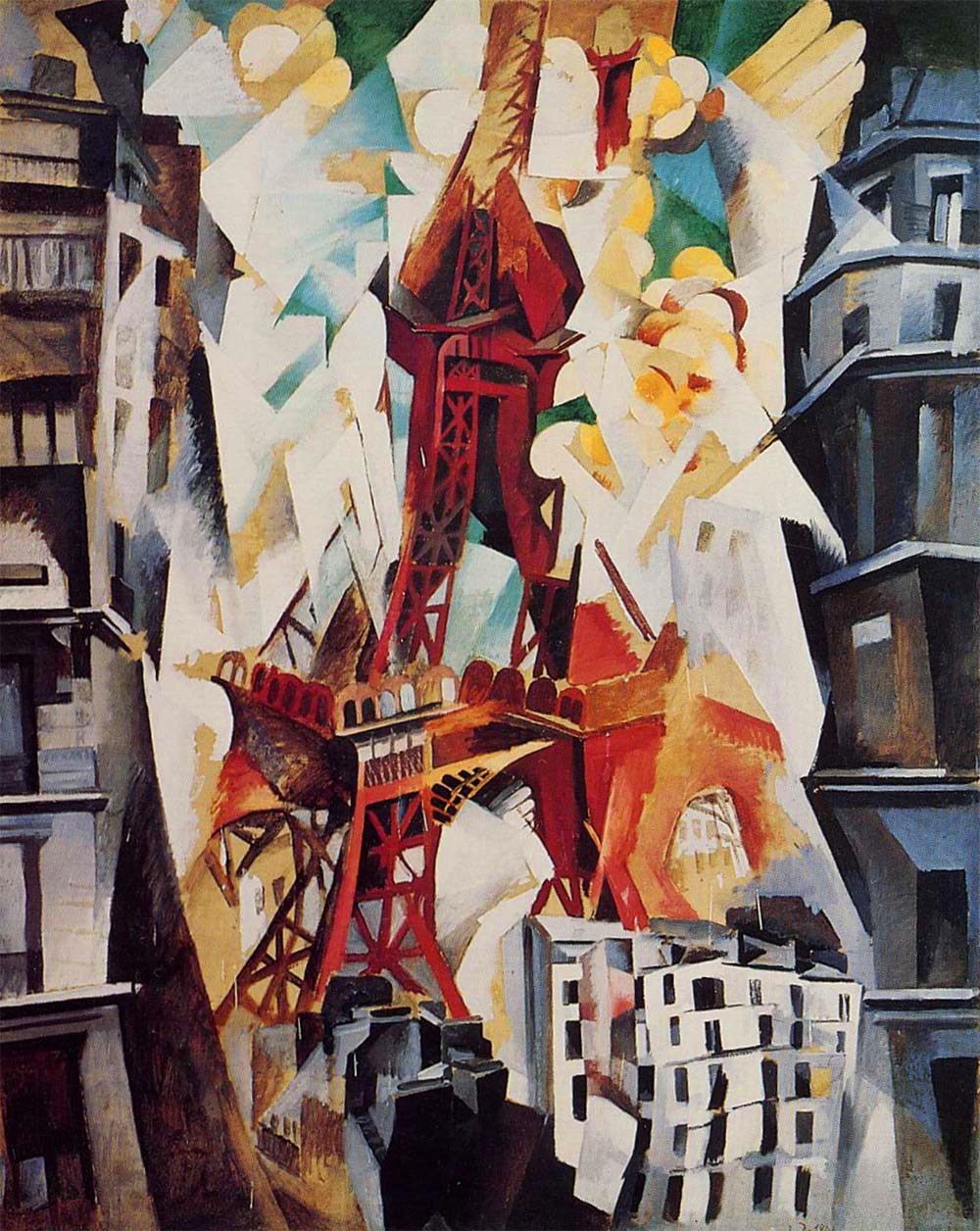 Champs de Mars, the Red TowerRobert Delaunay · 1911
 Hommage to BlériotRobert Delaunay · 1914
 The City, No. 2Robert Delaunay · 1910
 Colorful SymphonyRobert Delaunay · 1915
 Portuguese WomanRobert Delaunay · 1916
 Carousel of PigsRobert Delaunay · 1922
 The Towers of LaonRobert Delaunay · 1912
 The Eiffel TowerGeorges Seurat · 1889
 The Ten Largest, No. 1, ChildhoodHilma af Klint · 1907
 The Ten Largest, No. 2, ChildhoodHilma af Klint · 1907
 The Ten Largest, No. 3, YouthHilma af Klint · 1907
 The Ten Largest, No. 4, YouthHilma af Klint · 1907
 The Ten Largest, No. 5, AdulthoodHilma af Klint · 1907
 The Ten Largest, No. 6Hilma af Klint · 1907
 The Ten Largest, No. 7, AdulthoodHilma af Klint · 1907
 The Ten Largest, No. 8, AdulthoodHilma af Klint · 1907
 The Ten Largest, No. 9, Old AgeHilma af Klint · 1907
 The Ten Largest, No. 10, Old AgeHilma af Klint · 1907
 Tree of Knowledge, No. 1Hilma af Klint · 1915
 Tree of Knowledge, No. 2Hilma af Klint · 1915
 Sentimental MusicArthur Dove · 1913
 Movement No. 1Arthur Dove · 1911
 SailsArthur Dove · 1912
 Sunrise, Northport HarborArthur Dove · 1929
 George Gershwin-I'll Build a Stairway to ParadiseArthur Dove · 1927
 Portrait of a German OfficerMarsden Hartley · 1914
 Movement No. 5, Provincetown HousesMarsden Hartley · 1916
 AbstractionMarsden Hartley · 1914
 HimmelMarsden Hartley · 1914
 Painting No. 48Marsden Hartley · 1913
 Forms (Peinture)Patrick Henry Bruce · 1919
 Composition IIPatrick Henry Bruce · 1916
Paul Klee: playful lines and secret worlds
Paul Klee said that drawing is like taking a line for a walk. His pictures are full of tiny jokes: cats and birds, twittering machines, fish that glow, houses that spin.
 SenecioPaul Klee · 1922
 Twittering MachinePaul Klee · 1922
 Angelus NovusPaul Klee · 1920
 SumpflegendePaul Klee · 1919
 Cat and BirdPaul Klee · 1928
 Fish MagicPaul Klee · 1925
 The GoldfishPaul Klee · 1925
 Villa RPaul Klee · 1919
 Rotating HousePaul Klee · 1921
 Resting ShipsPaul Klee · 1927
 ArchitecturePaul Klee · 1923
 Highway and BywaysPaul Klee · 1929
 Limits of ReasonPaul Klee · 1927
 Ab ovoPaul Klee · 1917
 Variations (Progressive Motif)Paul Klee · 1927
 Omega 5 (Traps)Paul Klee · 1927
 Flower Family V.Paul Klee · 1922
 Little Jester in a TrancePaul Klee · 1929
 Rose GardenPaul Klee · 1920
Cubism and Futurism: breaking the world into pieces
Cubists showed an object from many sides at once. The Futurists added speed: cyclists, soccer players and racing cars smeared across the canvas.
 The City RisesUmberto Boccioni · 1910
 The Street Enters the HouseUmberto Boccioni · 1911
 Dynamism of a CyclistUmberto Boccioni · 1913
 Dynamism of a Soccer PlayerUmberto Boccioni · 1913
 States of Mind I: The FarewellsUmberto Boccioni · 1911
 Visioni simultanee, 1912Umberto Boccioni · 1912
 MateriaUmberto Boccioni · 1912
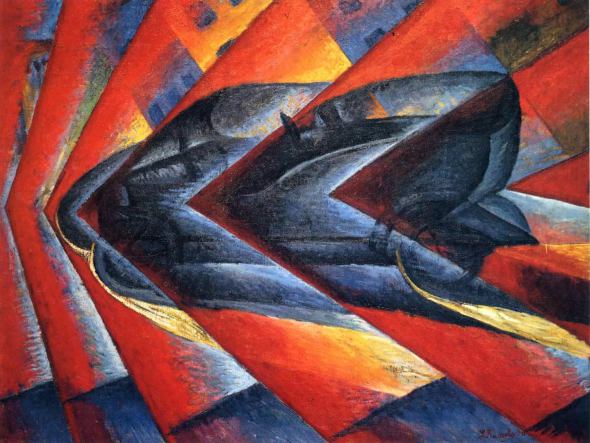 Racing carLuigi Russolo · 1913
 LightningLuigi Russolo · 1910
 The Bottle of Anís del MonoJuan Gris · 1914
 Violin and Playing Cards on a TableJuan Gris · 1913
 Still Life with a GuitarJuan Gris · 1913
 Harlequin with a GuitarJuan Gris · 1917
 L'Homme au hamac (Man in a Hammock)Albert Gleizes · 1913
 Woman with PhloxAlbert Gleizes · 1910
 Coney IslandJoseph Stella · 1914
 Battle of Lights, Coney Island, Mardi GrasJoseph Stella · 1913
 Steel MillJoseph Stella · 1919
 Little Falls, New JerseyOscar Florianus Bluemner · 1917
 Flag Station, Elizabeth, New JerseyOscar Florianus Bluemner · 1925
 Old Canal PortOscar Florianus Bluemner · 1914
Cut, paste and build: collage
Kurt Schwitters glued tickets, scraps and bits of rubbish onto his pictures and called the result Merz. It was a new way to make art from whatever was lying around.


